Ancient Methods, Modern Results: How the Winchester Bible Shaped The Saint John’s Bible
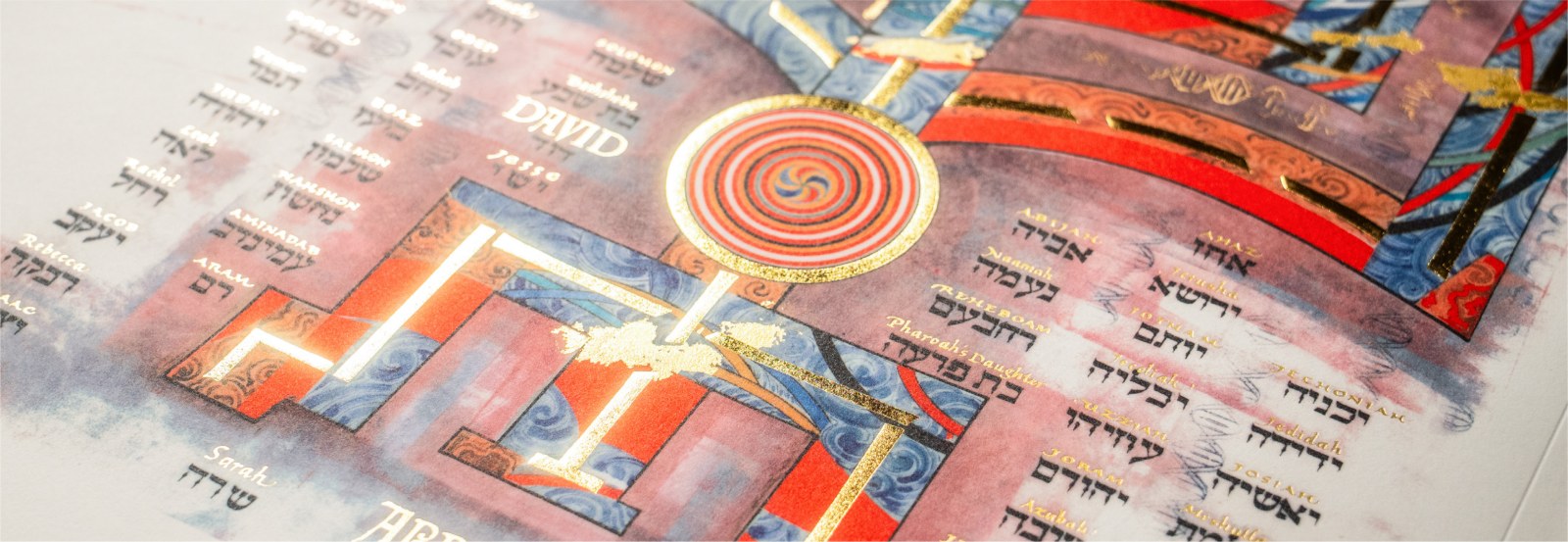
When encountering The Saint John’s Bible for the first time, people are often struck by its ability to blend ancient scripture with modern visuals.
Yet, behind this modern masterpiece stands a centuries-old mentor: the Winchester Bible.
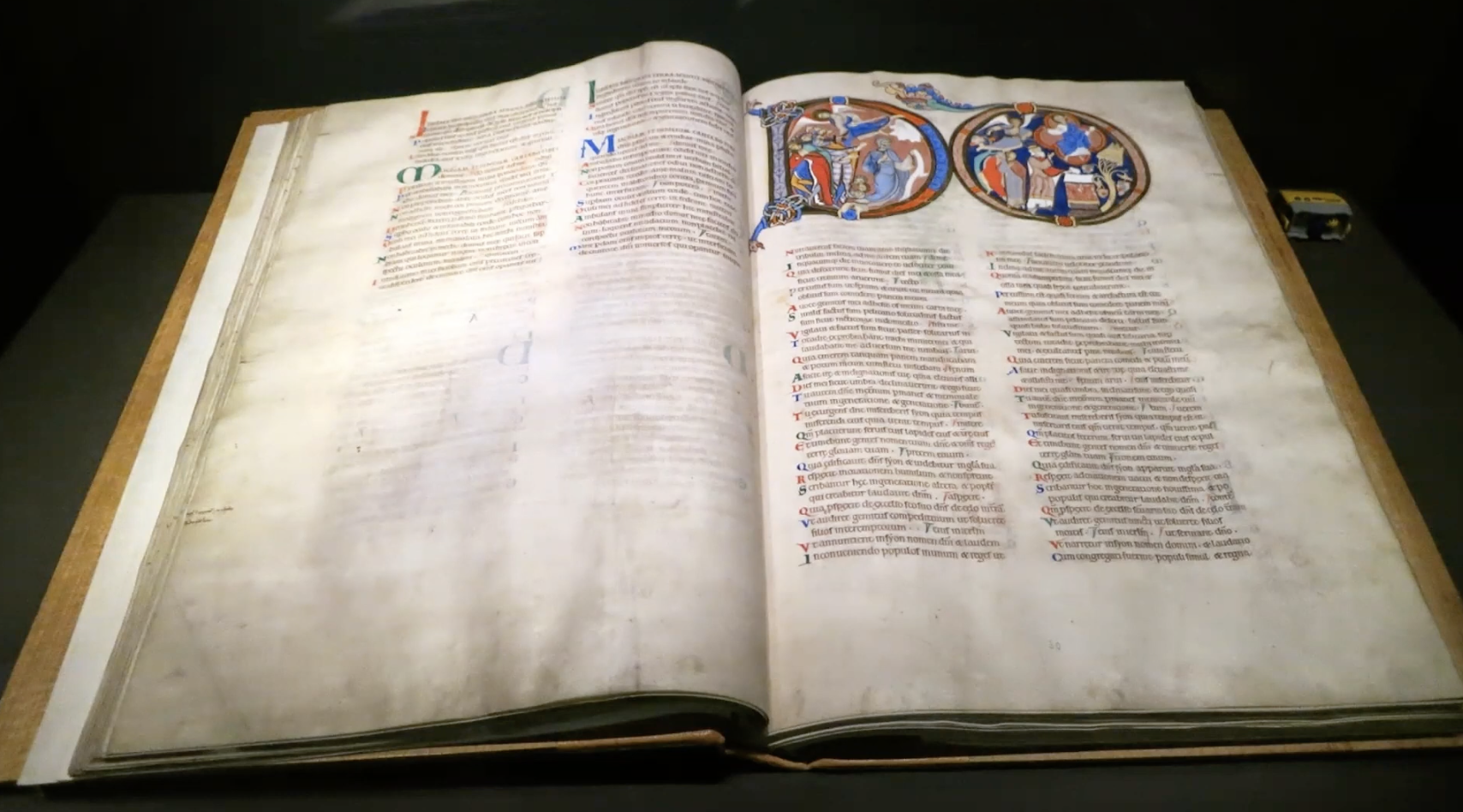
In one video of the series, Ancient Methods, Modern Results, Tim Ternes, Curator of The Saint John’s Bible, explores how the medieval manuscript became a guiding inspiration for the design and vision of The Saint John’s Bible.
The story begins with Donald Jackson, the renowned calligrapher who first imagined creating a handwritten Bible for the twenty-first century. Jackson envisioned a Bible rooted in the ancient traditions of medieval scribes while still speaking to modern readers. In 1998, Saint John’s Abbey formally commissioned the project, launching nearly 14 years of collaborative work.
But creating a Bible on such a scale required extensive research. To know where you’re going, you must know where you came from. So, Jackson needed inspiration from the great manuscript traditions that came before him.
As Ternes explains, medieval scribes were copyists, not authors. They relied on exemplars — earlier texts that guided their work. In the same way, Jackson searched for historical manuscripts that could help shape the visual identity of The Saint John’s Bible.
Some famous ancient works were quickly ruled out. The Dead Sea Scrolls existed in scroll form rather than as bound books and were written in Hebrew rather than English. Smaller manuscripts like the St Cuthbert Gospel were intimate, personal works. Both were too far removed from the vision Jackson hoped to achieve.
What he needed was a complete Bible with scale, presence, and artistic harmony.
That search eventually led him to the Winchester Bible at Winchester Cathedral.
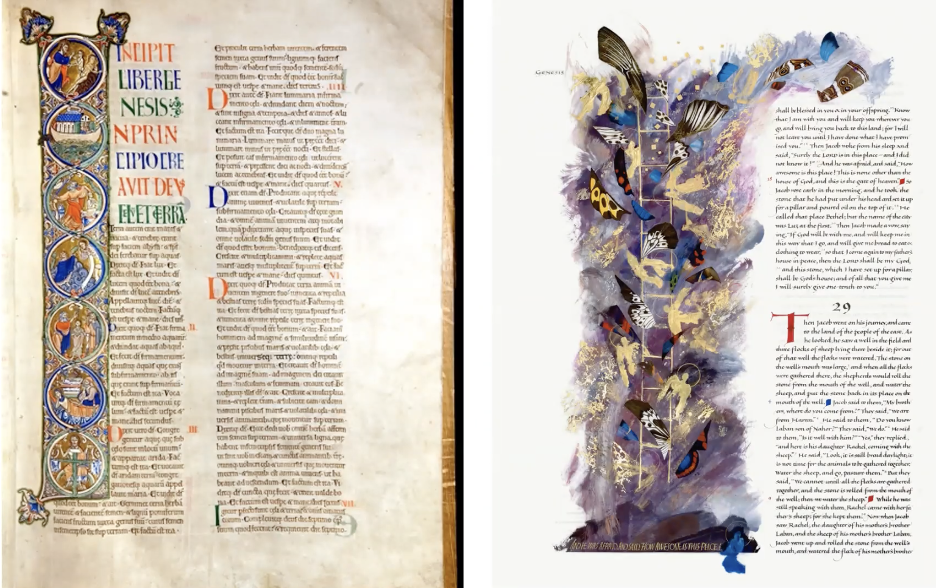
Created during the high point of twelfth-century manuscript production, the Winchester Bible embodied many of the qualities Jackson admired. It was enormous, with pages nearly two feet tall. It featured richly illuminated artwork, elegant lettering, and a layout designed for communal reading within a monastic setting.
Most importantly, the manuscript possessed what Ternes calls a remarkable “visual harmony.”
The pages balanced dense columns of script with generous margins and luminous artwork. The lettering rested comfortably within the page rather than overwhelming it. The two-column structure created a strong visual grid capable of supporting dramatic illuminations.
Jackson carefully studied the manuscript, measuring and analyzing its proportions in hopes of discovering the mathematical secret behind its beauty. Instead, he found something even more important: there was no formula.
The harmony of the Winchester Bible came from artistic instinct developed through years of practice. That realization profoundly shaped the development of The Saint John’s Bible.
Jackson did not want to simply imitate a medieval manuscript. A direct copy would have produced what Ternes describes as something “antiquarian” — a work trapped in the past rather than alive in the present. Instead, Jackson adapted the principles of the Winchester Bible for a contemporary audience.
One of the most significant lessons came from the vellum itself.
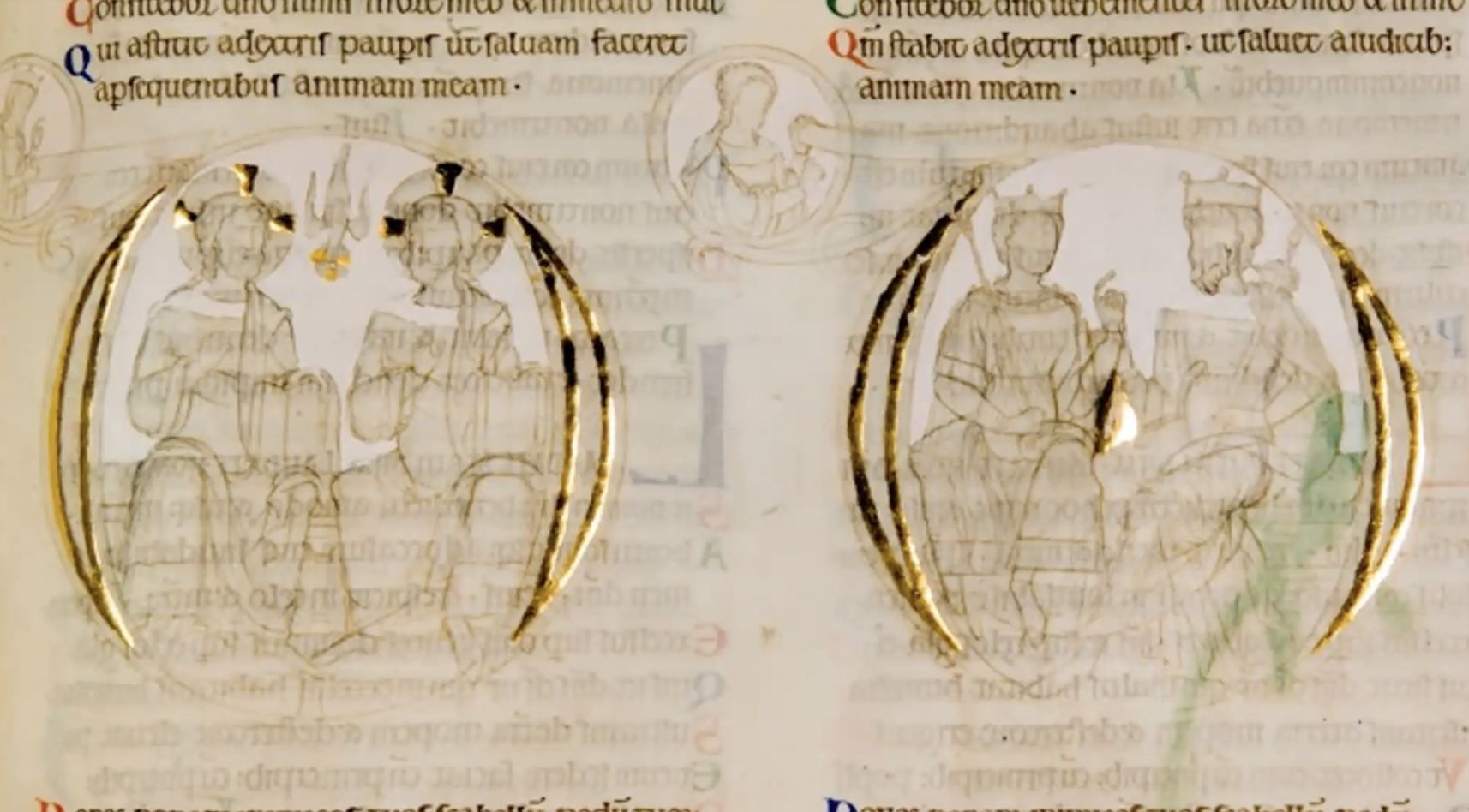
While studying another medieval manuscript known as the Grande Bible, Jackson noticed how extremely thin vellum allowed a distracting amount of show-through from the opposite side of the page. Though some show-through still remains in The Saint John’s Bible, that experience convinced him that The Saint John’s Bible needed thicker vellum capable of supporting the weight of modern illuminations and calligraphy.
It also inspired the Bible’s now-famous seven-volume structure.
Rather than compressing everything into a single unwieldy book, Jackson envisioned the Bible as a series of volumes opening “like peacocks,” allowing readers to encounter each spread as a dramatic visual experience. The seven-volume format also aligned beautifully with biblical symbolism.
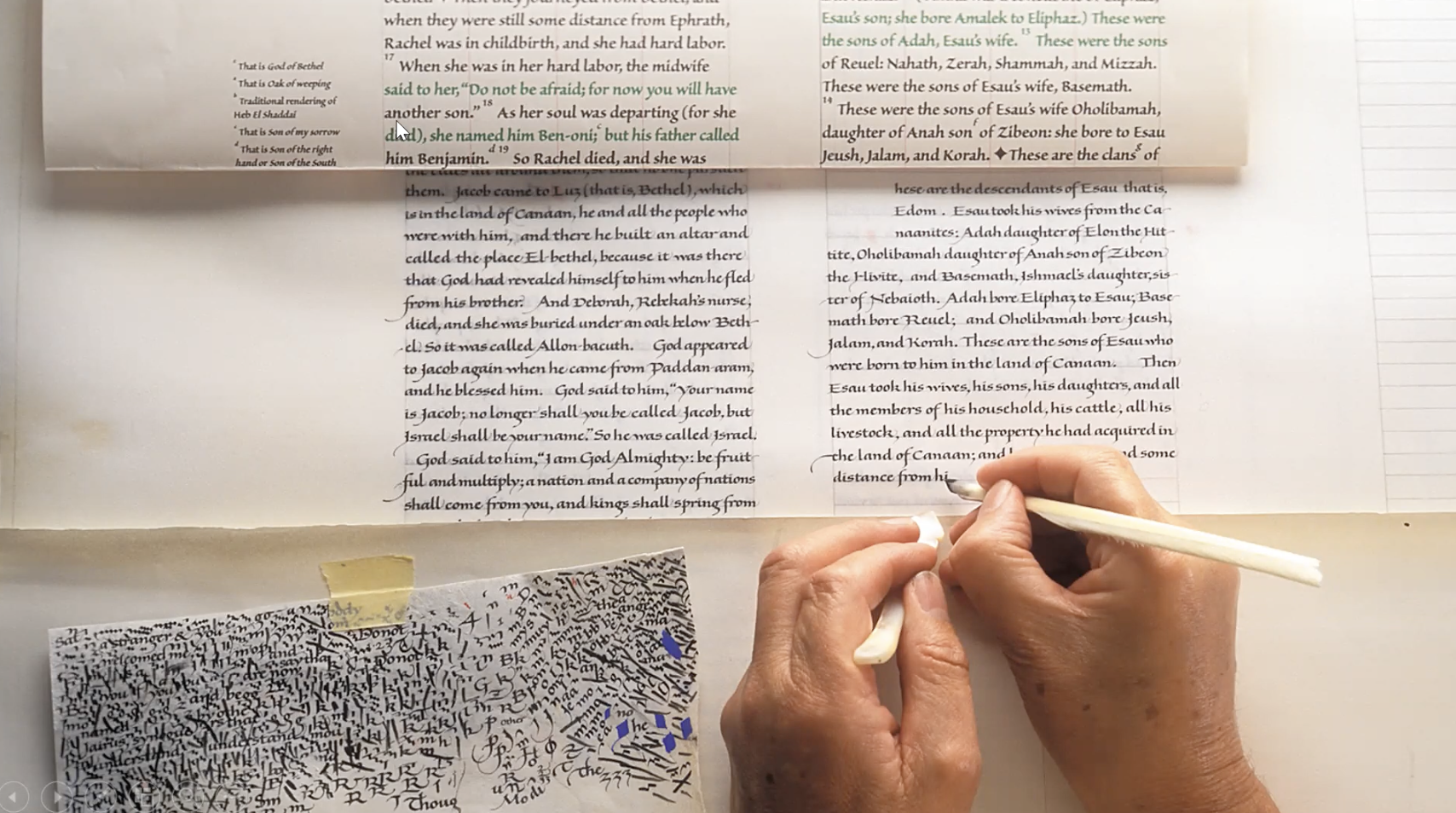
To achieve consistency across more than 1,100 handwritten pages, Jackson and his team combined ancient craftsmanship with modern technology. Graphic designers used computers to create detailed page layouts showing the exact placement of text and illuminations. Those guides allowed six principal scribes to work simultaneously wh

ile maintaining remarkable visual consistency throughout the manuscript.
The result is a Bible that feels deeply rooted in medieval tradition while unmistakably belonging to the modern world.
Like the Winchester Bible before it, The Saint John’s Bible was created not as a private object, but as a communal experience — a work meant to gather people together around scripture, art, and shared wonder.
In this way, the medieval mentor lives on in every illuminated page.
The Saint John’s Bible: Ignite the Spiritual Imagination
To learn how you can gift a Heritage Edition of The Saint John’s Bible to an institution of your choice, click here.
To read more stories similar to this one, visit the blog page and subscribe to our e-newsletter, Sharing the Word.