Selflessness and Surrender: A New Perspective on The Saint John’s Bible
Intern Curator Avari Drennan is the mind behind this year’s exhibition of The Saint John’s Bible at the Hill Manuscript Museum and Library in Collegeville, Minnesota, themed Selflessness and Surrender.
Collegeville, Minnesota–What does it mean to surrender? What does it mean to live selflessly? And what might those ideas look like when expressed through the art and theology of The Saint John’s Bible?
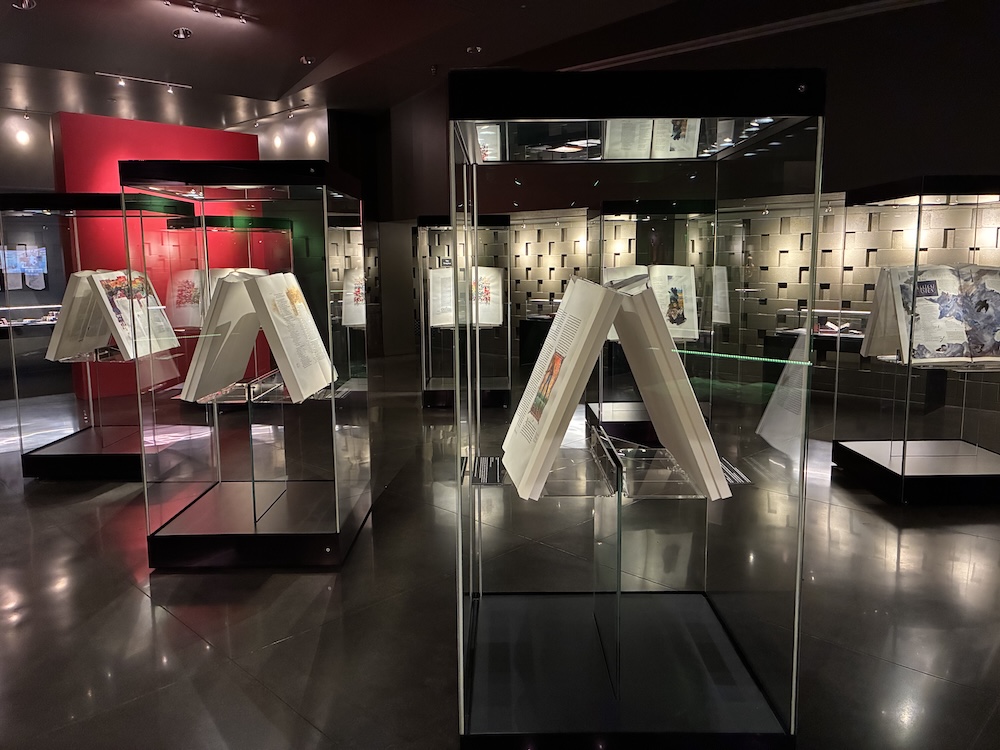
Those questions are at the heart of the current exhibition of The Saint John’s Bible at Saint John’s University in Collegeville, Minnesota, where a new selection of pages invites visitors to experience the Bible in a new light.
“After a lot of time, thought, and prayer, I chose the theme of Selflessness and Surrender,” said Avari Drennan, the College of Saint Benedict student who curated the exhibition as part of her summer work with The Saint John’s Bible. “The combination and contrast between the two ideas guided everything that I did for this exhibition.”
Under the thoughtful mentorship of Curator Tim Ternes and Assistant Curator Eamon Cavanaugh, Drennan strived to create an exhibition that would encourage visitors to look closely, ask questions, and consider how the pages might speak to their own lives.
Choosing the theme was step one. From there came the much more difficult task of selecting the pages.
With hundreds of original pages, each with countless possible connections to the theme, Drennan first whittled down her options by following her gut instinct.
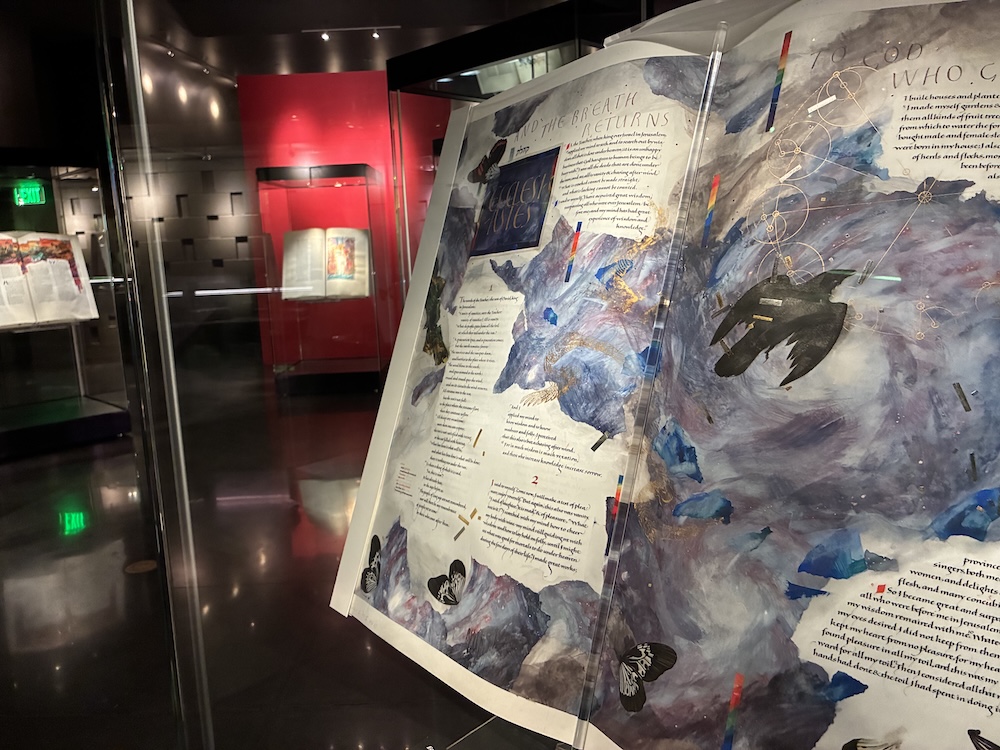
That’s precisely how Drennan selected Ecclesiastes Frontispiece as the first illumination in the exhibition. She chose this page in part because of its striking emotional quality. Drennan described being drawn to its unusual combination of sadness and beauty, a reminder that ambiguity can be as powerful as certainty.
The Ten Commandments, the second illumination Drennan chose, offered a different kind of invitation. Rather than depicting the commandments as the familiar numbered list on two tablets, the illumination prompted Drennan to reconsider what they represent.

“When I imagine the Ten Commandments, I think of two tablets with a numerical list,” said Drennan. “This illumination doesn’t include any of that, which really altered how I view this passage. The Ten Commandments typically are seen as rules that you have to surrender to. What does this interpretation of the passage say about those rules? Are these rules that I’m willing to surrender to? Why? Ultimately, my interpretation is that, to be selfless, we have to surrender to these ideas. The symbolism on this page is truly incredible and honestly life-changing.”
If the Ten Commandments symbolize the perfect opportunity to surrender and be selfless, the Four Horsemen of the Apocalypse, meanwhile, show the stark opposite.
The dramatic illumination, also featured in Drennan’s exhibition, depicts violence and destruction, offering an image of what the world might look like in the absence of surrendering and selflessness. The page feels strikingly relevant, inviting visitors to consider the violence and uncertainty present in the world today.
“The Four Horsemen of the Apocalypse, on the contrary, is horrific,” said Drennan. “It’s also highly relevant today. It shows what the outcome looks like if humanity doesn’t surrender to anything or to anyone. You see war and violence. It’s a mess of the opposite of surrendering, the opposite of selflessness. It’s the desire for control and pure selfishness.”
For Drennan, one of the illumination’s most intriguing details is a set of watchful eyes in the background. Their meaning and source are left open to interpretation, and that ambiguity is an important part of the exhibition experience.
During the tours of the gallery she leads, Drennan has often asked visitors: Whose watchful eyes are those?
The answers have ranged from a person witnessing the horror to God watching over humanity and everything in between. There is no single correct response. Instead, the question encourages visitors to bring their own experiences and perspectives to the page.
That spirit of conversation extends throughout the exhibition. Each display includes interpretive text and a “for further thought” question designed to connect the illumination to the themes of selflessness and surrender, and ultimately back to the visitor.
The goal is not to explain the art, but to create space for reflection.
“My hope for the gallery is that, when people leave, they leave changed,” said Drennan. “Whether it’s because this was all handwritten in the 21st century, or whether one of the questions provoked something in them, or whether the art invokes something in someone, I hope that they leave impacted in whatever way makes sense to them.”
To visit the gallery and check viewing hours, click here.
The Saint John’s Bible: Ignite the Spiritual Imagination
To read more stories similar to this one, visit the blog on saintjohnsbible.org, subscribe to our e-newsletter, Sharing the Word, and follow us on LinkedIn, Facebook, Instagram, and Twitter.