

An Ecumenical Enthronement: Archbishop of Canterbury Sworn in on Benedictine-Commissioned Bible
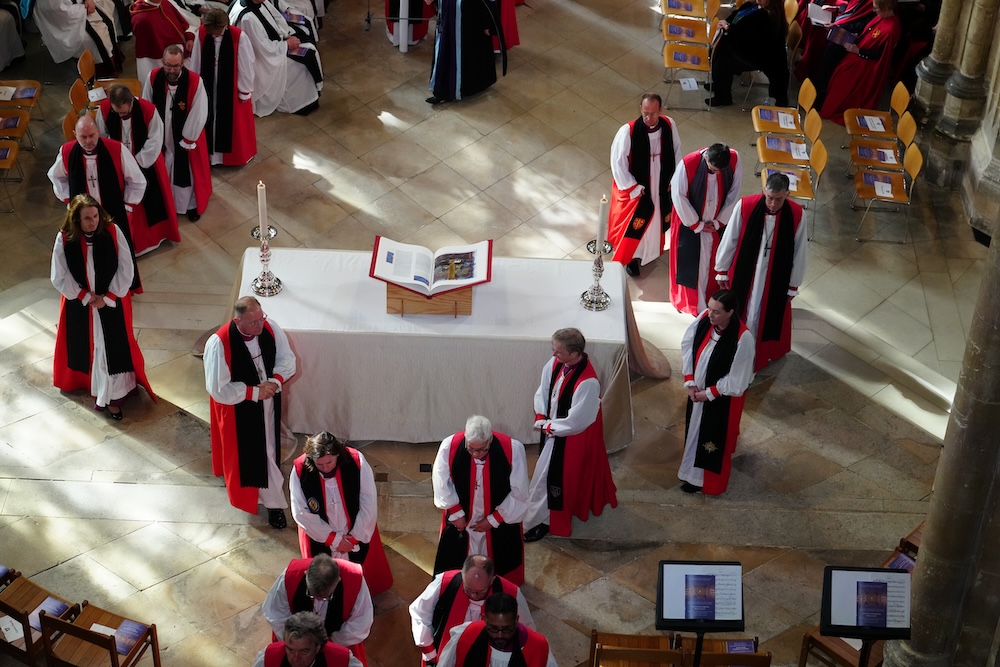
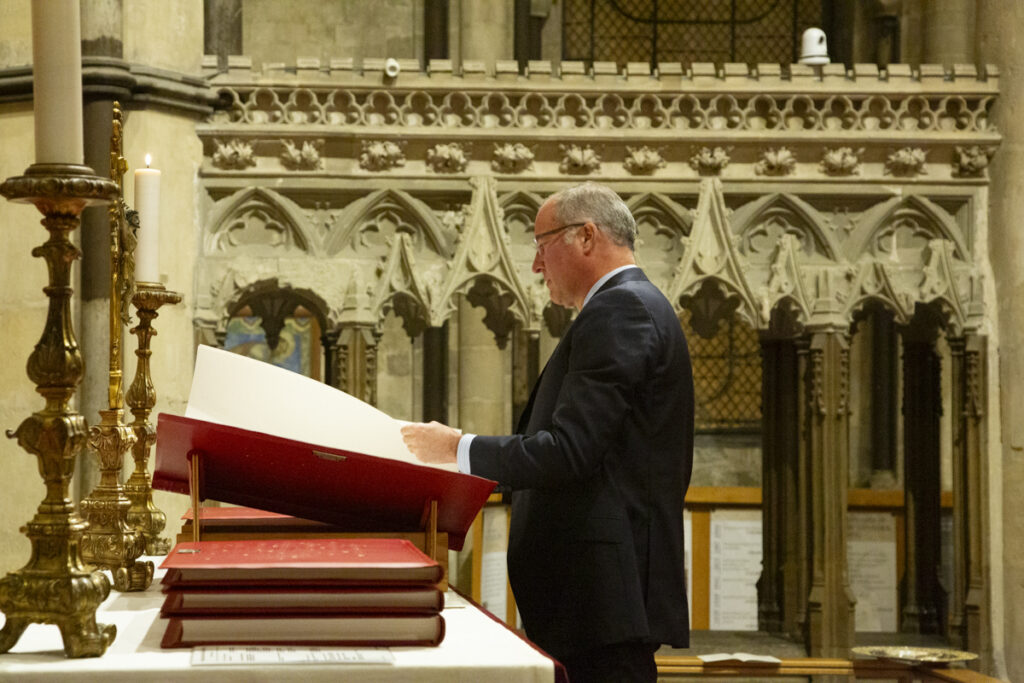
Canterbury, England–On March 25, 2026, the Church of England officially installed the first woman Archbishop of Canterbury, The Most Rev. Sarah Mullally. In the presence of Their Royal Highnesses The Prince and Princess of Wales, Archbishop Mullally swore the Corporal Oath on Canterbury Cathedral’s Heritage Edition of The Saint John’s Bible.
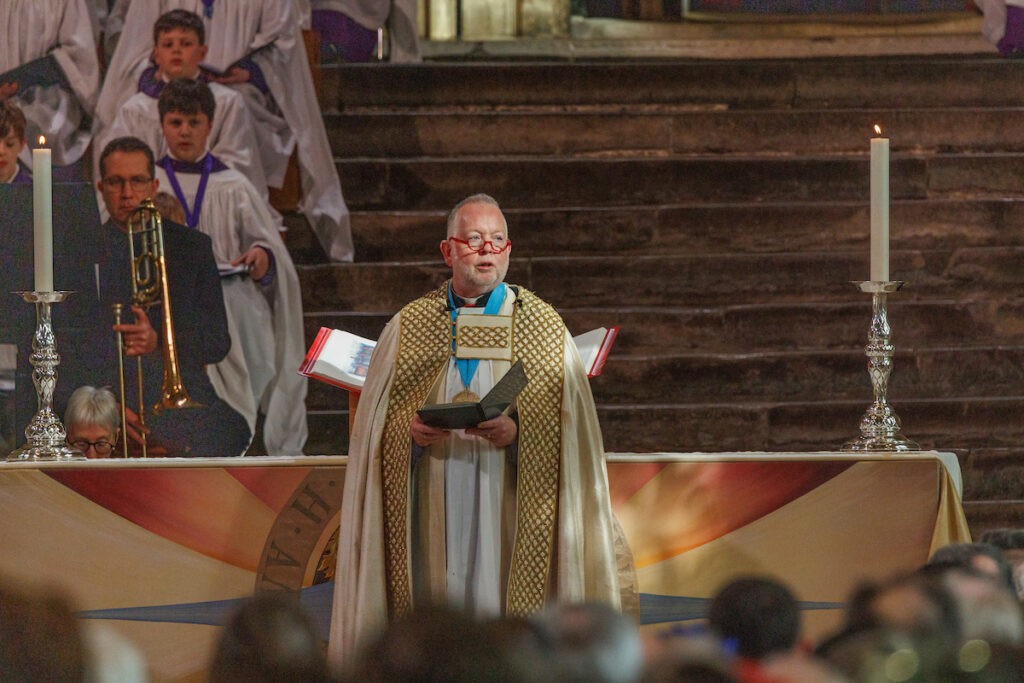
The use of a Bible commissioned by a Benedictine monastery in Collegeville, Minnesota, is not only a meaningful gesture of ecumenical solidarity but also a touching ode to Canterbury Cathedral’s Benedictine origins.
“Because of its resonance with the Cathedral’s Benedictine past, and the powerful messages of its imagery which speak to the modern age, The Saint John’s Bible has been chosen for the Archbishop’s Corporal Oath in the Nave,” wrote The Very Rev. David Monteith, 40th Dean of Canterbury since the New Foundation, in the program for the enthronement. “This is instead of the late 6th century St Augustine Gospels, which were used in installations between 1945 and 2013, because of the vulnerability of that manuscript.”

“As the president of a Benedictine university and college,” said President Brian J. Bruess, Ph.D. of Saint John’s University and the College of Saint Benedict in Collegeville, Minnesota. “I am particularly delighted that Canterbury Cathedral has reached back to its Benedictine origins for this sacred ceremony to use a Bible created by a Benedictine community. We are honored that this work, born of these campuses and shaped by so many gifted hands, could serve the Church in such a historic and hopeful hour.”
Commissioned by a Benedictine university and abbey, The Saint John’s Bible is no doubt influenced by the Benedictine tradition, but is mainly intended to be an ecumenical Bible, one that emphasises the commonalities between each denomination of Christianity.
“This moment reflects a growing and grace-filled connection among our Benedictine community, Canterbury Cathedral, and the worldwide Anglican Communion – a shared commitment to faith, scholarship, beauty, and the ways sacred text can draw people together across traditions and generations,” said President Bruess.
The Saint John’s Bible: An Ecumenical Bible for the Modern Era
To read more articles similar to this one, subscribe to the Heritage Program’s monthly e-newsletter, Sharing the Word, or visit the blog.